Articles & Resources
Common Mistakes When Applying for Nonprofit Tax-Exempt Status with the IRS
One of the most common problems nonprofit founders face is a mistake in their IRS tax exemption application. Whether the IRS asks for more information, misclassifies you into the wrong status, or flat-out rejects your application, these mistakes cost you time, money, and momentum in your nonprofit startup journey.
Read this article to learn from the founders who came before you!
Quick Summary
Getting your IRS application right the first time saves you months of delays. Here are the four things you can do to avoid the most common mistakes:
- Include the IRS-required language in your Articles of Incorporation
- Ensure you meet the eligibility requirements for the IRS application
- Craft a narrative that is specific to your activities while not
- Financial projections that aren't realistic or consistent
Mistake #1: Using Articles that Don’t Comply with the IRS
The most common mistake happens before you even start your IRS application. The very first filing for a new nonprofit is your Articles of Incorporation. Those Articles are filed with your state and have to follow your state rules. But guess what – the IRS cares about your articles too!
If you’re going to apply for tax exemption, your incorporation documents must include some IRS special language. The free form from your state usually doesn’t provide that language for you, which means you’ll need to create a custom Articles of Incorporation draft.
Learn about those requirements for your formation documents here: What to Include in Your Nonprofit’s Articles of Incorporation.
Many founders discover this problem only after the IRS sends a rejection letter, which means they have to go alllll the way back to the beginning to redo their articles.
Mistake #2: Choosing the Wrong IRS Application
There are two application forms for nonprofits looking for 501(c)(3) status – the full Form 1023 and the 1023-EZ.
Anything labeled “EZ” seems good, right? Shorter, faster, cheaper. But you can only use that application if you meet all the eligibility criteria.
It may be tempting to fudge your answers to those eligibility questions so you can stay with the shorter form but let me tell you – it’s not a good idea. Filing the wrong application can end in automatic rejection or worse, losing your tax-exempt status down the line.
If you're unsure about eligibility, file the full form. The extra complexity beats explaining to donors why your tax-exempt status was revoked.
Mistake #3: Giving Too Little (Or Too Much) Detail in your Narrative
If you’re filing full Form 1023, you’ll submit a detailed narrative statement describing your activities. That application is reviewed by a real person who’s going to compare your narrative against your articles, bylaws, financial projections, and fundraising materials. You want all your materials to come together to form a picture of the nonprofit.
Vague descriptions like "education and charitable activities” give no real insight into your programs. On the other hand, overly specific descriptions can invite greater scrutiny or limit your future growth.
Either way, you could end up with a request for additional information (which will extend your processing time by MONTHS), or trouble with your IRS tax-exempt status down the line.
Mistake #4: Using a Fake Budget
You need to prepare financial projections for the next 3 years if you’re filing full Form 1023. While crunching the numbers is NO ONE’S favorite part, these budgets are important.
Founders sometimes include numbers that are outlandishly high without any real plan to achieve them. Or, on the flip side, some applications project almost no revenue or ignore necessary expenses.
You don’t need to have a crystal ball and know exactly what the numbers are going to be. But if your numbers make no sense, you can bet an IRS agent is going to look closer and ask for additional information.
How to Avoid IRS Application Pitfalls
Most application mistakes come when founders try to DIY their application. The IRS does have instructions but let me tell you – there’s a REASON why there are professionals whose whole job is to work with the IRS. The last thing you want is go back and forth with the IRS for months. Hiring a professional to help prepare your application may cost more up front, but it will save you time, money, and effort in the long term.
Remember, applying for your tax exempt status is only one step in the process! Learn about the entire nonprofit startup process here: The Legal Steps to Forming a Nonprofit
Frequently Asked Questions
What's the filing fee for these applications?
The standard fee for Form 1023 is $600. The 1023-EZ has a reduced fee of $275. Fees are non-refundable, even if your application is denied.
How long will I wait for the IRS to respond to my application?
The timeline varies for each application, but in general the 1023-EZ takes 2-4 weeks and the Full Form 1023 can take 3-6 months (or longer). Errors or incomplete applications can add months to either timeline.
What do I do while I'm waiting for our tax exemption?
You can begin operations, but you can't claim to be a public charity and donors can't deduct their contributions until your exemption is approved.
Do I need a lawyer to apply for tax-exempt status?
It's certainly not required, but it's a good idea! These applications are complex, and hiring a lawyer who is familiar with the process can help you set a strong foundation.

Recent Podcast Episodes
175: Oopsies, I Take It Back | Can You Revive a Dissolved Nonprofit?
174: Click, Click, You’re Done | Public Charity vs. Private Foundation
173: Let It Go! | What Happens to the Money When a Nonprofit Closes?
172: Nonprofit PTSD | Nonprofit Board Basics, Explained by a Teenager
171: You Don’t Need Some Guy on a Yacht | Ditching the Fundraising Myths with Patrick Kirby
170: Shots Fired! | Can a Nonprofit Fire Its Own Board?
169: Different Flavors, Same Ice Cream | How Can a Nonprofit Organization Offer Retirement Benefits? with Christopher Tipper
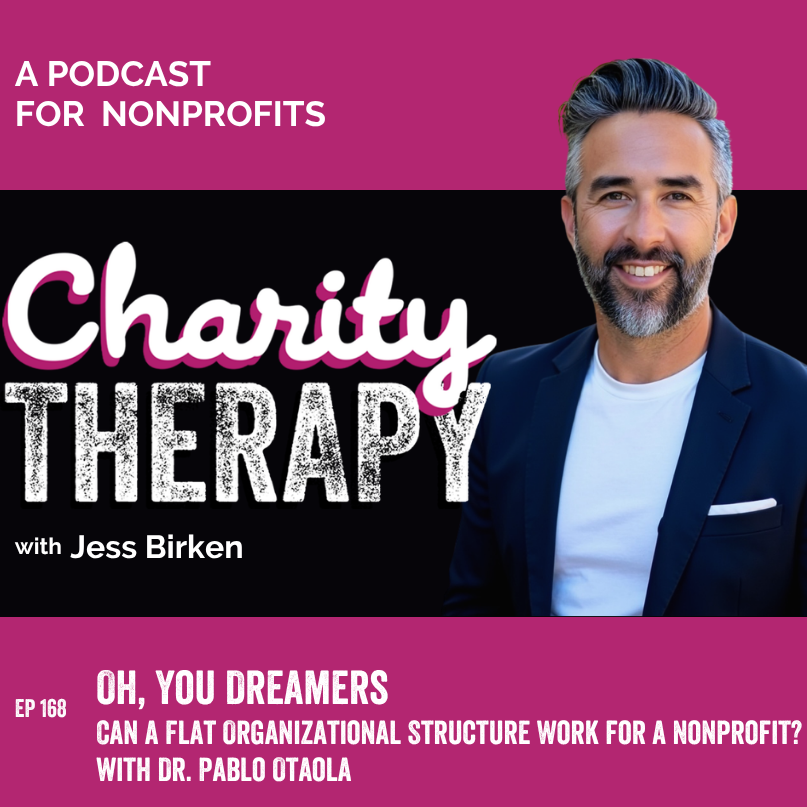
168: Oh, You Dreamers | Can a Flat Organizational Structure Work for a Nonprofit? with Dr. Pablo Otaola